From NASCAR Legends to Front Row Roasts: Why the Wildest Moments in Stand-Up Comedy Happen When the Script Hits the Floor and the Comedian Embraces the Chaos of Unfiltered Crowd Work, Turning a Simple Southern Catchphrase Into a Masterclass of Spontaneous Improv That Keeps Every Single Audience Member On the Edge of Their Seat
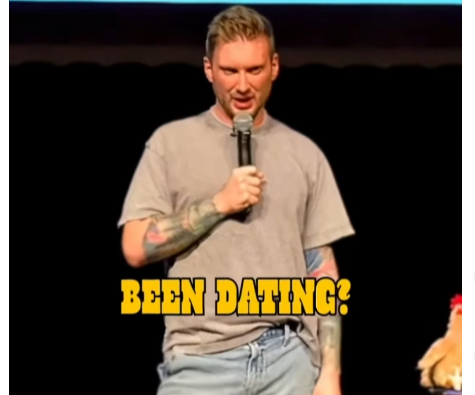
There is a specific kind of magic that happens in a dark comedy club when a performer ditches the rehearsed transitions and leans entirely into the energy of the room. You’ve seen the clips: a comedian spots a camouflage hat in the front row, hears a rowdy “Raise hell, praise Dale!” from the back, and suddenly, the hour-long special they spent years writing is out the window. This is the high-wire act of crowd work, where the audience becomes the co-author of the night’s best jokes.
The Art of the Spontaneous Spark
Stand-up is often viewed as a monologue, but the best comedians treat it like a conversation. When a performer invokes the spirit of a legendary figure like Dale Earnhardt, they aren’t just making a racing reference; they are tapping into a specific, high-octane cultural shorthand. It’s a signal to the crowd that “the vibes are officially wild.”
In the world of improv and crowd work, these outbursts are gifts. A heckle isn’t always an interruption; sometimes, it’s a setup. The skill lies in the comedian’s ability to take that raw, unpolished energy—the “Raise hell” mentality—and refine it into a punchline that feels like it was planned for weeks, even though it was born three seconds ago.
Why We Love the “Chaos” Set
In a world of highly polished, edited, and filtered content, live comedy remains one of the few places where you can witness true spontaneity. There is a communal thrill in watching a comedian navigate a rowdy room. It feels dangerous, hilarious, and entirely unique to that specific Tuesday night in that specific city.
“Comedy is a live sport. You can practice the swing, but you never know how the ball is going to bounce once it hits the crowd.”
When a comedian leans into the #improv side of their craft, they are essentially “praising Dale”—taking the wheel, flooring the gas, and trusting their instincts to get them around the turn without crashing. It’s about confidence. If the comic flinches, the room turns. If they embrace the chaos with a grin and a quick-witted comeback, they become the hero of the night.
The Evolution of the Viral Crowd Work Clip
You’ve likely seen your #fyp flooded with these moments. Why do they perform so well? Because they are “one-of-one” moments. A scripted joke can be heard a thousand times, but a comedian roasting a guy named Dale about his choice of footwear is a lightning strike.
These clips showcase the comedian’s raw intellect. It’s one thing to remember a story about your grandmother; it’s another thing entirely to dismantle a heckler’s logic while simultaneously making them feel like part of the show. It requires:
-
Active Listening: Hearing the subtext behind the shout.
-
Hyper-Presence: Being so “in the moment” that nothing gets past you.
-
Charisma: Ensuring the “hell-raising” stays fun and never turns mean-spirited.
Keeping the Engine Running
Ultimately, comedy is about release. Whether it’s through a biting observation or a silly riff on Southern culture, the goal is to let the audience blow off steam. The “Raise hell, praise Dale” energy is the perfect mascot for this. It’s loud, it’s unapologetic, and it’s fast.
The next time you’re at a show and the comedian starts talking to the person next to you, don’t cringe—lean in. You’re about to see the most honest form of the art.