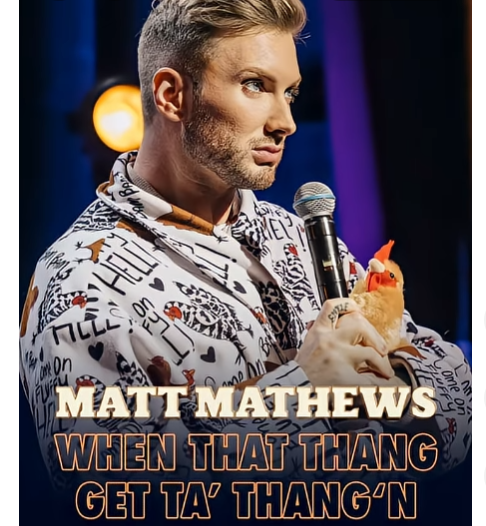
The Hilarious Struggle of Daily Life on the Farm: Why Managing Stubborn Chickens and Mischievous Goats Is a Never-Ending Cycle of Dramatic Eye-Rolls, Muddy Boots, and Unpredictable Shenanigans That Only True Homesteaders and Fans of Matt Mathews Can Truly Appreciate While Navigating the Chaotic Reality of Outdoor Chores and Rural Animal Husbandry.
Anyone who has ever spent a morning trying to reason with a goat or herd a flock of distracted chickens knows that the “aesthetic” version of farm life portrayed in high-end magazines is largely a myth. In reality, farm life is a symphony of minor inconveniences, punctuated by moments of pure, unadulterated comedy. When you see a post featuring three eye-roll emojis and a hashtag for farm chores, you aren’t looking at a cry for help—you’re looking at the universal signal of a homesteader who has reached their limit with a creature that has a brain the size of a walnut and the ego of a Roman emperor.
The “eye-roll” is the official mascot of the modern farmer. It usually happens around 6:30 AM when you realize that the chickens have decided that their expensive, ergonomically designed nesting boxes are inferior to a dusty corner behind a stack of rusted scrap metal. Or perhaps it occurs when you find your lead goat, the one you’ve dubbed the “mastermind,” standing atop your pristine SUV as if it were a jagged peak in the Himalayas. There is a specific kind of behavioral defiance in farm animals that defies logic; they don’t just break the rules, they seem to actively study your expectations specifically so they can subvert them.
This brings us to the phenomenon of “farm chores” as a form of endurance art. On paper, feeding the animals and cleaning the coop should take twenty minutes. In practice, it involves a thirty-minute detour to find the one hen that squeezed through a hole that shouldn’t physically accommodate her wingspan, followed by a wrestling match with a goat that believes your ponytail is a high-protein snack. This is the Matt Mathews effect—the recognition that farm life is essentially a long-form improv set where the animals are the hecklers and you are the frustrated straight man.
Social media platforms like TikTok have become the digital “town square” for this shared frustration. Using hashtags like #chickensoftiktok or #goatsoftiktok allows creators to document the absurdity of their daily lives. These videos resonate because they strip away the romanticism. We see the mud, we hear the screeching, and we witness the sheer audacity of the livestock. It turns the solitary struggle of rural living into a communal experience. When a farmer rolls their eyes at a camera, thousands of people across the globe roll their eyes in solidarity, likely remembering the time their own rooster decided to pick a fight with a garden hose.
Beyond the humor, there is a deep resilience required for this lifestyle. You have to be able to laugh at the chaos, or you’ll never survive the winter. The eye-roll is a coping mechanism—it’s a way of saying, “I see what you’re doing, and I’m choosing to find it funny instead of infuriating.” It represents a level of emotional intelligence where the farmer accepts that nature cannot be controlled; it can only be managed with a sense of humor and a very sturdy fence.
Ultimately, the “farm life” journey is about the bond between the keeper and the kept. Despite the drama, the escape artists, and the morning chores that never seem to end, there is nowhere else these creators would rather be. The eye-roll is just a love language between a human and the animals that keep their life interesting, messy, and infinitely entertaining.