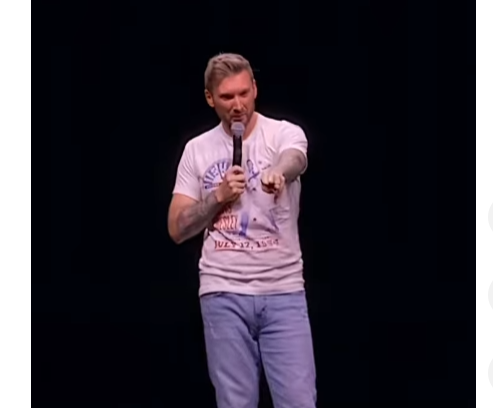
The Hilarious Art of the Missed Connection: Why Navigating the Unpredictable Dynamics of Audience Interaction and the Unexpected “Luke” Moments Creates a Viral Masterclass in Spontaneous Crowd Work, Proving That the Best Stand-Up Comedy Often Happens When the Performer Embraces the Unscripted Reality of a Room That Refuses to Follow the Script Today.
In the high-energy, high-stakes world of #standupcomedy, the most memorable moments are rarely the ones that were painstakingly rehearsed in front of a mirror. Instead, they are the “lightning in a bottle” interactions that occur when a comedian reaches out to the crowd and gets a response they never saw coming. The phrase “Luke wasn’t studying me” perfectly captures the essence of a #comedian losing a battle for attention to the very person they were trying to riff with. It’s a moment of pure, unadulterated vulnerability that transforms a standard set into a viral #fypage sensation, proving that in comedy, the “fail” is often the biggest win of the night.
The humor in these “Luke” moments stems from the shattering of the fourth wall. Traditionally, the comedian holds all the power—they have the microphone, the stage lights, and the punchlines. But when an audience member like Luke is completely tuned out, checking his phone, or simply daydreaming, the power dynamic shifts instantly. The comedian’s ability to “call out” this lack of attention with self-deprecating wit is what separates a pro from an amateur. It’s a masterclass in improv, requiring the performer to abandon their written material to address the hilarious reality of the person in the front row who clearly has somewhere else to be.
From a psychological perspective, these interactions are incredibly grounding for an audience. There is a collective sense of relief when a performer acknowledges a “glitch” in the room. It signals to everyone else that the show is a living, breathing event where anything can happen. This transparency builds immense rapport and trust. By laughing at the fact that they aren’t “winning” everyone over, the comedian becomes more relatable and human. It turns a potentially awkward rejection into a shared triumph of honesty, making the rest of the set hit harder because the audience is now fully invested in the comedian’s journey to win back “Luke.”
On social platforms, these clips are digital gold because they feel authentic and unscripted. In an era of highly produced content, a raw video of a stand-up comic getting humbled by a distracted fan feels refreshing. It invites the digital audience into the room, making them feel like they are part of an exclusive, inside joke. For the creator, these moments showcase a level of versatility and “quickness” that can’t be faked. It’s a testament to the “grit” of the craft—the willingness to lean into the chaos and find the funny in the most inconvenient places.
Furthermore, these interactions highlight the evolution of crowd work. Today’s audiences want to be part of the story, even if they aren’t trying to be. The “Luke” in the audience becomes a temporary character in the comedian’s universe, providing a fresh perspective that keeps the performance from feeling stagnant. It’s a reminder that the best comedy is a two-way street, fueled by the energy (or lack thereof) of the people in the seats.
Ultimately, “Luke wasn’t studying me” is a celebration of the unpredictability of live performance. It’s about the timing, the humility, and the joy of a punchline that was written by accident in the middle of a Thursday night set. So, keep the mic on, keep your eyes on the crowd, and remember: sometimes the person who isn’t listening is giving you the best material of your career.