The Hilarious and Slightly Alarming Reality of Accidental Farm Exposure: Why the Chaotic World of Livestock Care and Barnyard Chores Leads to Bizarre Internet Questions About Parasite Prevention, Personal Hygiene, and the Unexpected Hazards of Living Closely With Animals as a Modern Homesteader Navigating the Humor and Grit of Rural Life Today.
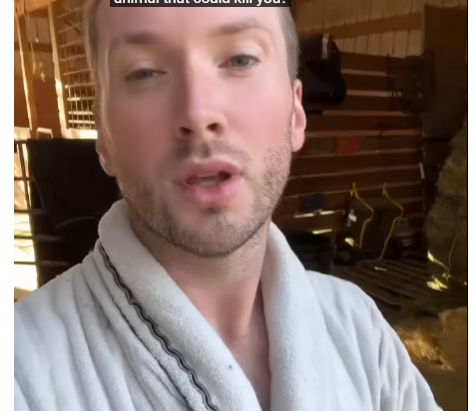
In the world of social media, particularly within the “FarmTok” niche, there is a very fine line between professional animal husbandry and complete, unadulterated chaos. When you spend your days wrestling goats, cleaning out chicken coops, and managing the health of various livestock, the boundaries of “normal” conversation tend to shift. Suddenly, questions that would seem horrifying in a suburban office setting—like asking a popular creator if they have ever “wormed” themselves—become the peak of relatability. It is a testament to the gritty, unglamorous, and often hilarious reality of living a life tethered to the land and the creatures that inhabit it.
The humor in this specific query stems from the universal struggle of the homesteader. Anyone who has ever administered a dewormer to a stubborn horse or a wiggly calf knows that the medicine rarely stays where it is supposed to go. Between the spitting, the splashing, and the general physical comedy of farm chores, it is almost a rite of passage to end up wearing more of the medication than the animal does. While the suggestion of a human needing such a treatment is usually a tongue-in-cheek joke about the sheer amount of dirt and “barn life” one consumes, it highlights the visceral connection farmers have with their work.
This type of content thrives because of its radical authenticity. Creators like Kailyn Lowry and other farm-focused influencers have tapped into a vein of digital storytelling that rejects the “polished” look. Instead of filtered sunsets, we get muddy boots, messy hair, and the kind of laughter that only comes from a day of being outsmarted by a sheep. When followers engage with these “gross-out” jokes, they are participating in a shared secret: that nature is messy, unpredictable, and often requires a very thick skin (and perhaps a very strong stomach). It transforms the solitary labor of farm chores into a global comedy club where the punchline is usually covered in hay.
Furthermore, there is a fascinating psychological element to the “gross-out” joke. In a digital age where we are often disconnected from the origins of our food and the reality of biology, these blunt conversations about parasites, mud, and animal health act as a grounding force. They remind us that humans are, at their core, biological beings living in a biological world. Laughing about the hazards of the barnyard is a way for creators and viewers to acknowledge the absurdity of the human condition. It’s a way to say, “Yes, my life is currently a disaster of mud and livestock, and isn’t that wonderful?”
The engagement on these posts also reveals the strength of niche communities. The “fyp” (For You Page) algorithm works by finding people who share these specific, often weird, life experiences. When someone drops a comment about deworming or the smell of a pigpen, they aren’t just being funny; they are signaling that they belong to the tribe. They are the people who know the difference between “clean” and “farm clean,” and who understand that a little dirt on your clothes is just a sign of a productive afternoon.
Ultimately, the question of whether a farmer has ever “wormed themselves” is the ultimate inside joke. It’s a badge of honor for those who have chosen a life of calloused hands and early mornings. It proves that despite the hard work and the literal filth, there is always room for a laugh. After all, if you can’t find the humor in the chaos of the coop, you probably shouldn’t be holding the shovel.